Posts by Mark Taylor
The Cartoon Block with Evan Burse. LF012
Evan Burse joins me on the Learning on Fire podcast and explores the most important learning and educational moments that shaped his life.
Our guest – Evan Burse
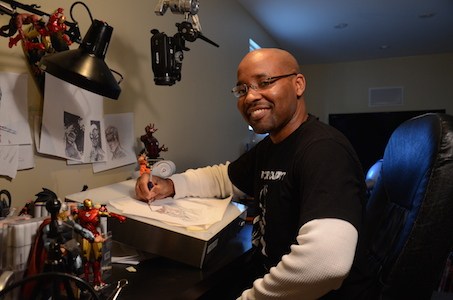
Evan has been an animation professional for over 10 years. He’s worked on such shows as Batman: The Brave and the Bold, Black Panther, Marvel’s Hulk and The Agents of S.M.A.S.H., and Teen Titans.
Since 2009, Evan has been passionately teaching aspiring artists how to draw their favorite characters on his YouTube channel, Cartoon Block. The channel has accumulated over 100,000 subscribers and over 18 million views. Evan enjoys sharing his passion for drawing while inspiring young artists to follow their artistic goals.
His website is dedicated to helping you become a better artist. Whether it’s impressing your friends…or improving your portfolio so you can get a job in the animation/comic book industry; whatever your dreams are, Evan is here to help you make them a reality!
Evan lives in Los Angeles, California
Questions asked on the Learning on Fire Podcast Interview
- Who are you?
- What does your life look like now and how is it different from when you were growing up?
- What was valuable about your school experience?
- Which teachers do you remember and why?
- Who did you admire when you were young?
- What was it about that person that had such an impact?
- What was the best piece of advice you have ever been given and who gave it to you?
- What advice would you give your younger self?
- What does your future look like?
- What podcast, book, video, film, song or other resource has had the biggest impact on your life and why?
Resources mentioned
Contact information
The Cartoon Block Youtube Channel
The Cartoon Block Facebook Page
Show Sponsor
National Association for Primary Education
Our aim is to achieve a higher priority for the education of children from birth to 13. High quality learning in the early years of life is vitally important to the creation of an educated society. Young children are not simply preparing for the future, they are living a never to be repeated time of life and the best way to learn is to live.
An introduction to National Association for Primary Education – NAPE 004
THE WAY WE WORK FOR PRIMARY EDUCATION
The National Association for Primary Education (NAPE) brings together everyone who has a concern for the learning of children from birth to 13 years. Members and affiliated schools work to improve education through the Early, Primary and Middle Years.
- All are welcome as members; Heads, Teachers, Teaching Assistants, Parents, School Governors. Inspectors, Administrators and entire School Communities.
- Members have an important voice exercised democratically. We influence public opinion and regular meetings are held with government ministers. The association is totally neutral politically.
- There are meetings of members both locally and nationally. Local associations can be formed.
- Conferences and workshops are arranged both locally and nationally.
- The association is administered by an elected National Council meeting termly to review progress and discuss national issues. Detailed administration is delegated to an Executive Committee which reports to the Council.
- NAPE is a prominent member of the Primary Umbrella Group which brings together all organisations working in the primary sector including subject associations and unions. This is a new and rapidly developing field of work which is facilitating cooperation and partnership.
- All aspects of education are experienced by children in their primary schools and we have strong links with subject associations.We often engage in cooperative ventures with them.
The National Association for Primary Education speaks for young children and all who live and work with them.
Our principles
The National Association for Primary Education speaks for young children and all who live and work with them.
Our aim is to achieve a higher priority for the education of children from birth to 13. High quality learning in the early years of life is vitally important to the creation of an educated society. Young children are not simply preparing for the future, they are living a never to be repeated time of life and the best way to learn is to live.
Primary schools should be centred upon the characteristics of childhood. The children are not miniature adults and they see their expanding world, think about it, develop ideas and acquire skills to deal with it in distinctive ways appropriate to their early development.
Teachers who specialise in the education of the young should be trusted to use their judgement in matching learning to the individual needs and responses of the children. They have a vital role alongside the child in supporting and structuring learning. Underlying primary pedagogy is the knowledge that young children learn best through their own fully sensory experience. Ideas are drawn out of personal experience and then held in the mind. Skills, which are always based upon ideas, are best learned in action as they are needed in life.
An invitation to join us.
Because everyone who shares time with a young child is to some degree a teacher our membership is open to all who are in broad agreement with our principles. We believe in a strong and continuous partnership between parents and teachers. Members become part of a national network which has effective links with all other voluntary associations working to improve the quality of early and primary education.
Teachers, heads, parents, carers, students, school governors, teacher trainers, nursery nurses, teaching assistants, administrators and consultants — all are welcome.
Belonging
The network’s activities are expanding both locally and nationally. Members are kept in touch through our newsletter, NAPENews and the journal, Primary First which is posted direct to members and available both in paperback and on-line. The NAPE website is updated regularly and critical comment including members’ views on current issues are publicised. We are fully involved in Twitter and Facebook and post regular podcasts. Conferences and Trade Fairs attract substantial attendances. The National Office maintains a 24/7 telephone helpline and a members’ directory so contact is always available. The journal is the only exception to the maintenance of communication by telephone and on-line. The prime focus of our work is in line with our principles, that is to say the education and upbringing of children in their earliest years and not the bureaucracy which invades current life. Administration, kept as simple and swift as possible is undertaken by volunteers who serve pro bono on the National Council and the Executive. Members who feel able to contribute to the smooth running of the association are elected or co-opted to serve on the Council.
Undoubtedly, membership of NAPE enhances and contributes to the professionalism of all who join us.
|
Where We Stand Making Our Voice Heard Members alongside the children in their schools can be confident that the association is speaking for them and that the view from the classroom is vitally important in shaping NAPE’s position when we are representing primary education.
Membership benefits include:
|
|
Contact Us NAPE National Office Moulton College Moulton Northampton NN3 7RR E: nationaloffice@nape.org.uk T: 01604 647646 www.facebook.com/NAPEofficial @N_A_P_E Visit us online at: www.nape.org.uk Join online at: www.nape.org.uk/how-to-join Reg. Charity Number: 289645: a partnership to promote the education of children from birth to 13 As mentioned on the podcast |
077: Character building PE with Jim Harte
Jim Harte is Physical Education Teacher at Cypress Woods Elementary School in Palm Harbor, FL.
Jim has over 37 years coaching and teaching experience. His programs have been recognized for Creativity and Innovation in PE and Recess.
Jim’s personal coaching and teaching philosophy is to develop the whole individual with a special emphasis on sound fundamentals and a principled foundation.
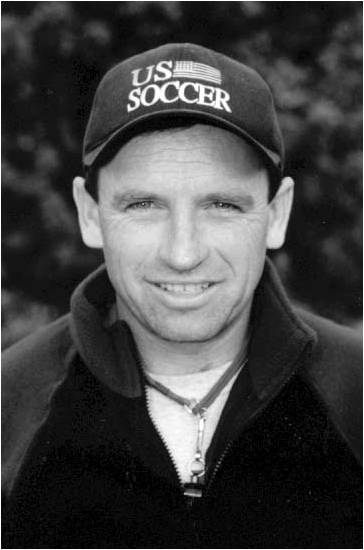
Jim has held a Florida teaching certificate for over 35 years. He has taught in both public and private schools. Physical Education programs created by Jim have won three international character-development awards and Jim was featured as a speaker at the Character Education Partnership International Character Forum in San Francisco in 2010. Jim has won several “Teacher of the Year” and “Coach of the Year” awards.
Jim earned a BS in Physical Education in 1980 from Quincy University in Quincy, IL. Over the years he has obtained numerous coaching licenses including USSF A and NSCAA Advanced National Diploma as well as a KNVB coaching certificate obtained in Holland. Further training includes the FranklinCovey Seven Habits signature training as well as FranklinCovey “Leader in Me” educational development training. This combination of soccer, education, and character training and experience makes Jim unique.
Jim Harte has a 36-year high school coaching career. He holds several FHSAA coaching records including most state championships (6), best coaching record in Final Four games (15-5), and most games coached (913). His career coaching record is 554-259-100 (Wins-Losses-Draws)
Numerous young people have been helped into college, pro, and international playing careers by Harte. He has also mentored many players that now have established coaching and teaching careers.
Jim is Founder and President of Marauder Soccer Camp, Inc – founded in 1981. He is a member of the Clearwater Central Catholic High School Hall of Fame.
Jim has been a fixture on the Tampa Bay youth soccer scene for almost four decades. He is currently works for the West Florida Flames. Prior to Flames Jim spent almost 20 years in leadership roles in several other local soccer clubs.
Jim was on the FYSA ODP State Coaching staff for many years including serving as state team head coach as well as instructor for state F, E, and D License courses. He is currently TOPS soccer Director for West Florida Flames Eastlake.
In July, 2018 the Tampa Bay Times named Jim Harte one of the top 50 coaches in Tampa Bay history – all sports, all levels. Jim was selected #19.
Jim Harte’s Marauder Soccer Camps
3 Schools of Character awards:
Mark reflects. LF011
Mark Taylor creator and host of the Learning on Fire podcast reflects on the wisdom he has found by interviewing his first 10 guests.
Everyones story and journey is different but we are starting to see common threads that connect all of the people interviewed who are living life on their terms.
Thanks to all of those who have shared their wisdom so far and I look forward to what is yet to come.
Our aim is to find out what are the most important learning and educational moments that shaped their lives?
Taking the focus away from grades and test scores to an understanding of what real learning is all about.
Think of this podcast as a half hour conversation where the interviewee shares the most important things they have learned in life that they would wish to pass on to the next generation.
Create Education 3D Printing – NAPE 003
Create Education invited Peter Cansell and Mark Taylor from the National Association for Primary Education to the TCT Show held at The National Exhibition Centre in Birmingham, UK to discuss how 3D printing is inspiring children in schools.

Paul Croft a Director of UltimakerGB the UK & Ire operations for Ultimaker and the Founder of the CREATE Education Project.
Sonya Horton produces the educational content for the Create Education Project.
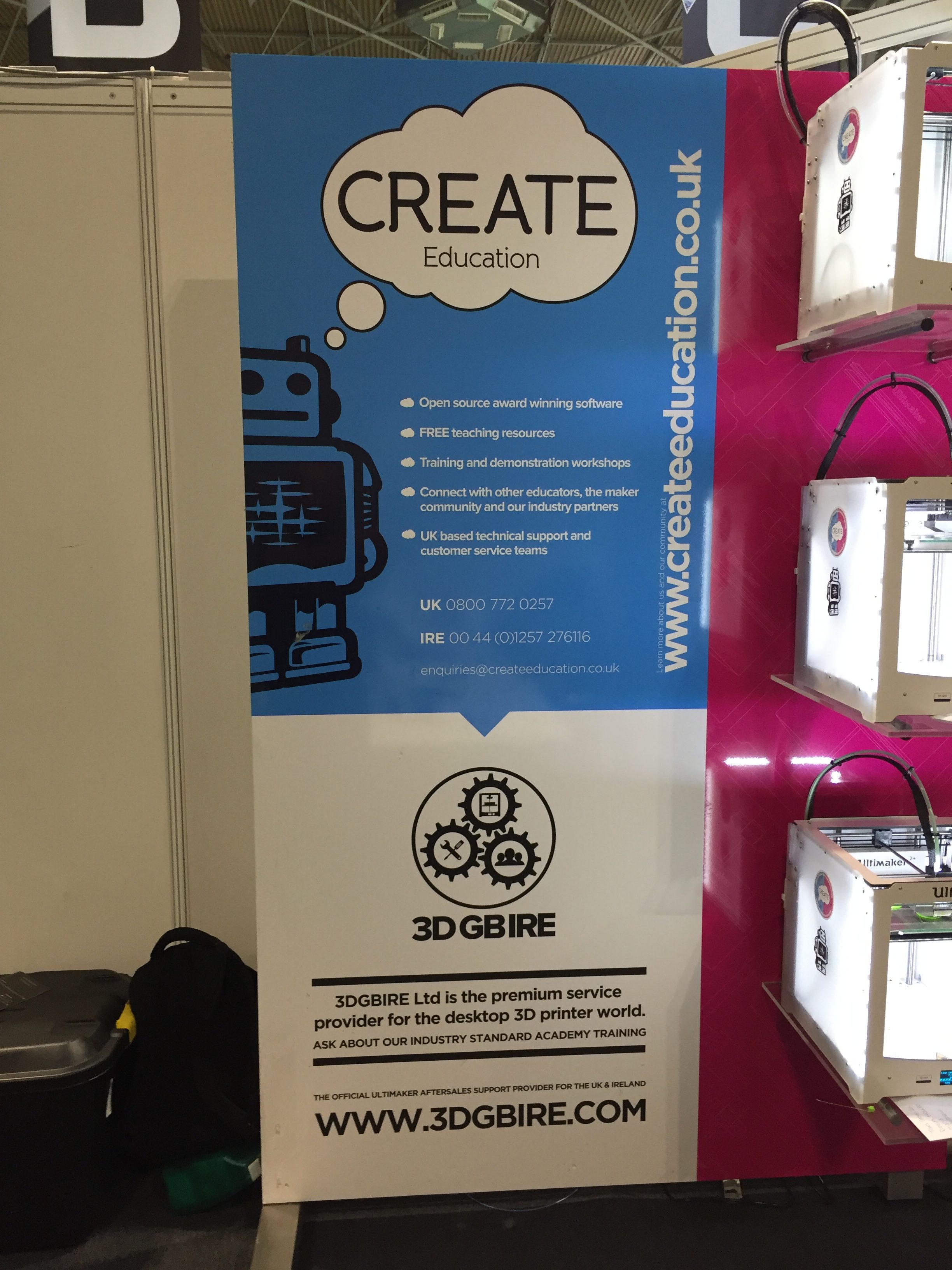
The CREATE Education Project brings together game changing technology with inspirational content and creative minds. This collaborative platform is designed to provide FREE resources and support to help educators to introduce and embed 3D Printing technology in the classroom. These include professional development resources, lesson resources, project ideas and inspiration. Contributors and community members are provided with a network of people embracing the same passion for sharing and improving access to education.
In order to ensure everybody has the opportunity to benefit from 3D printing and other exciting tech we reached out and asked educators and industry leaders what the challenges were and how can we make the best of the opportunities. We aligned these with our core values and CREATE Education Project was the result.
3D printing provides primary schools with a wealth of opportunities for engaging pupils right across the curriculum. This dedicated area of the CREATE website provides links to a wide range of resources, ideas and support to help Primary Schools in embedding 3D printing across the school at all levels and in multiple subject areas, using it as a tool to increase pupil engagement and attainment.
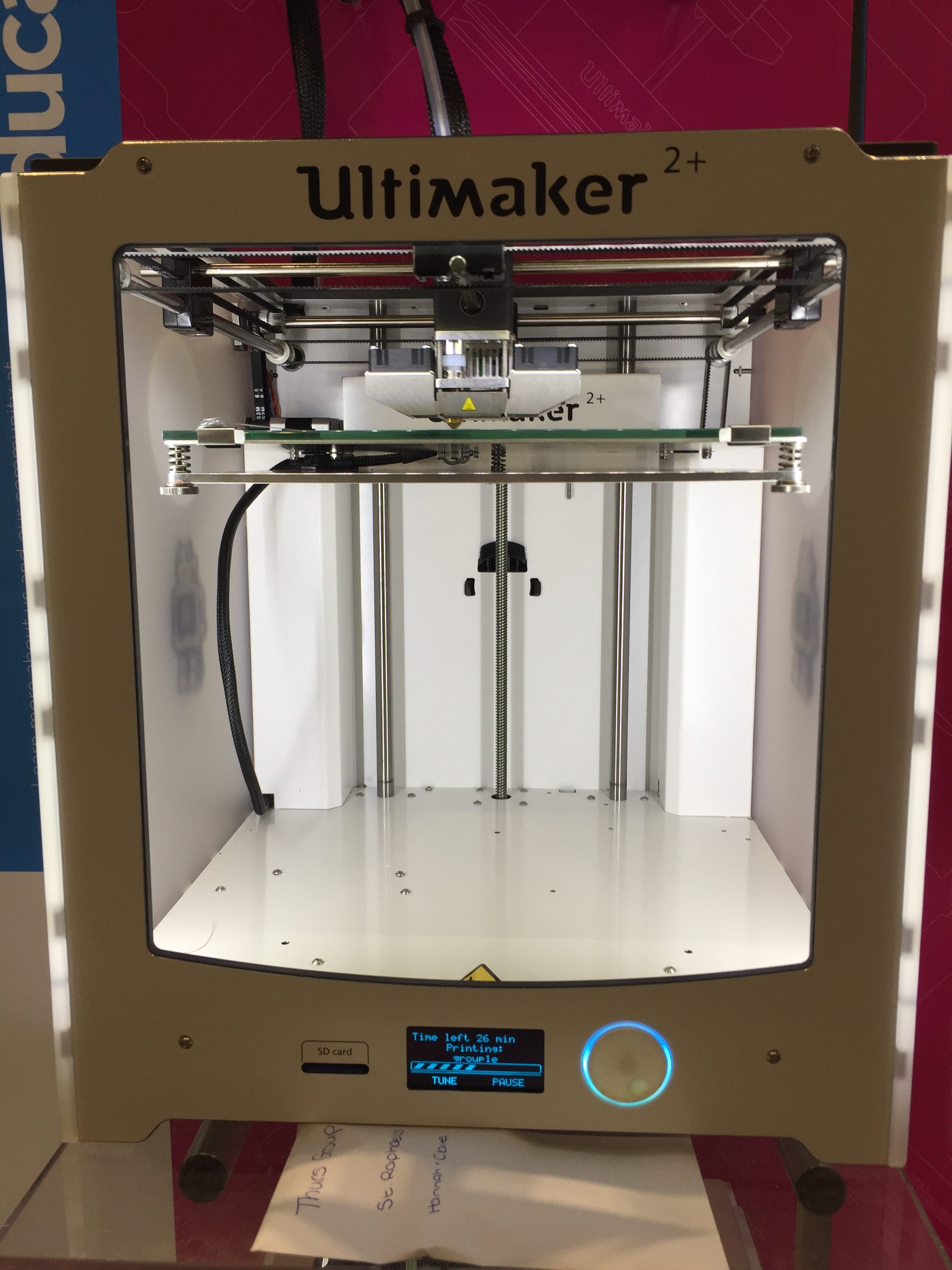
If you are new to 3D printing, the Primary Curriculum Guide provides a great starting point, but also take a look at the links below to all the content suitable for Primary schools. The site is constantly being updated with new resources, so why not bookmark this page so you always have instant access to everything you need.
www.createeducation.com/primary-education/